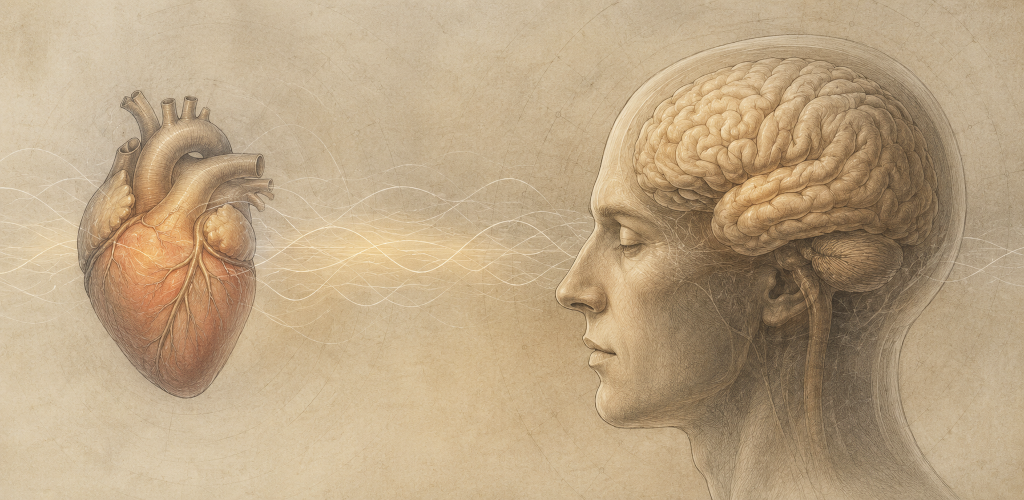
Intuition is a natural part of medical decision-making and is widely used in clinical practice, though it is often underestimated compared to other clinical methods. Learn more…
Exploring Medical Intuition
First, let’s get acquainted with the concept. According to the Institute of Noetics, the American scientific research center, medical intuition is the skill of using extrasensory perception to read the health conditions of another person, without the need to be in the same location as the person.
Does it require special abilities or a gift? First and foremost, you must realize that each and every one of us is ‘psychic’. But most of us learn to ignore the subtle impressions given to us by our intuition, it’s likely because our logical brain is blocking it out. If you want to truly get in touch with your intuition, the best way to do this is through the development of your ESP skills. This has been passed down through scientific studies for years for one simple reason — it is possible.
This does take a long time though. If you have not, and want to learn as fast as possible. Start out with a 15 minute active practice using trainers on VEREVIO — Remote Viewing Nexus for remote viewing practice, Mind Reader for telepathy training and Tetrad for fostering energy reading — and then read some observations and recommendations on their blog.
Scientific Researches on Medical Intuition
Intuition is a clinical decision-making method often used by experienced physicians. The practice of diagnosing patients at a distance through psychic powers dates back to 18 centuries. Edgar Cayce was known as one of the most well known medical psychics.
In medicine, using intuition is not unscientific; it is considered a creative process and a quick, skillful method that does not adhere to the logic of cause and effect. Explaining how intuition impacts clinical decisions is hard, which is why some believe that is something like a “sixth sense”.
Scientific researches, published through the National Library of Medicine, reveal cases where experienced physicians made correct diagnoses based partly on intuitive impressions before objective evidence was available. In some situations, this led to faster diagnosis and treatment. The ongoing research into Medical Intuition itself has been conducted at the Institute of Noetic Sciences since 2023.
At the same time, it is important to note that intuition should not be assessed in the same way as evidence-based science and requires a different understanding of its use. Like integrating intuition with evidence-based medicine that can foster a more creative and adaptive medical practice is a better approach.
How Is It Different from a Doctor’s Diagnosis?
Typically, specialists can make probable diagnoses at the very beginning of patient encounters.
Well, for example, you are a doctor, and you have a patient who has some problem. If you are a specialist, people come to you with specific problems. But a general practitioner does not know in advance what issue the patient will come with. Accordingly, it is advisable to have some time before the patient’s visit to prepare.
For example, a doctor can draw a diagram and, using empathic abilities, try to feel where it hurts and where it doesn’t. But for this, you need to associate with the person. This is usually not a very good approach because many of the other person’s ailments can be superimposed on you.
Accordingly, the remote viewing method is much better. A doctor who has conducted at least 300 remote viewing sessions can try to tune in to the target and attempt to perceive the ailments. Thirdly, the doctor can tune in to the patient’s thoughts. This can also be done as a reading in advance, before the patient arrives.
How Do You Understand That The Information Is Intuitive, And Not Just Imagination?
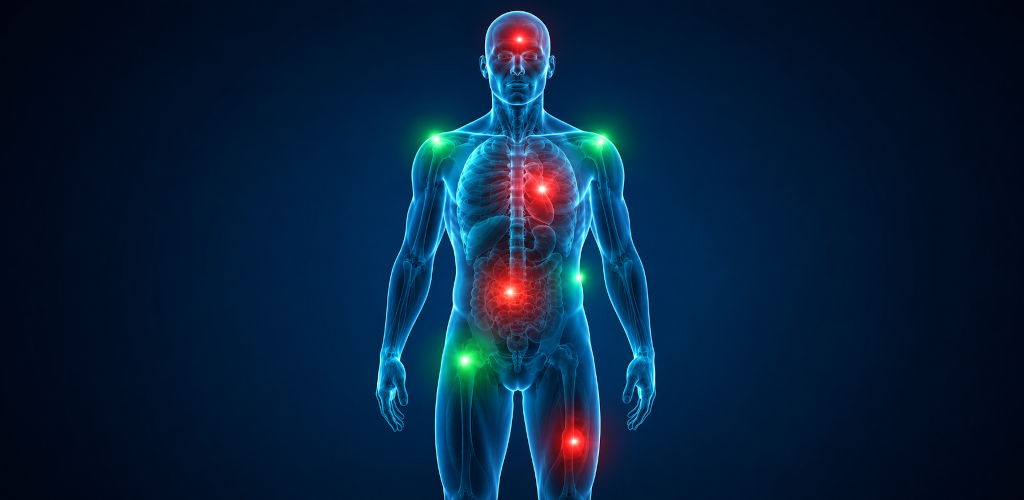
The strongest form of validation is statistical analysis. If you are showing a result in remote viewing of more than 33.3%, it is already statistically significant, since the chance model assumes only 25%. However, of course, we need to be talking about controlled results and a very large number of sessions.
If we are talking about the method itself, one of the most notable evaluations of remote-viewing research was conducted by statistician Jessica Utts, a professor at the University of California, Irvine. Working alongside other specialists, she reviewed results from numerous remote-viewing experiments around the world and concluded that the findings showed statistical effects that were unlikely to be explained by chance alone. In one of her interviews, it was mentioned that winning the lottery was hundreds of millions of times more likely than the possibility that the remote-viewing (rv) results were merely a coincidence.
The U.S. government officially terminated the real-life Star Gate Project, a secret military and intelligence operation investigating psychic phenomena and remote viewing. A natural question is why? Utts, who was involved in evaluating their data for Congress, suggested that even if some results appeared promising, they were less practical as technological methods of information gathering were becoming less costly at the time.
So the conclusion is that if medical intuition is approached as a form of remote viewing or any other psychic approach, its development and validation should rely on the same principles: regular practice, controlled conditions, and statistical analysis.